What happens to my children if I die without a will in New York?
By Ian Herrick — 2026-10-27
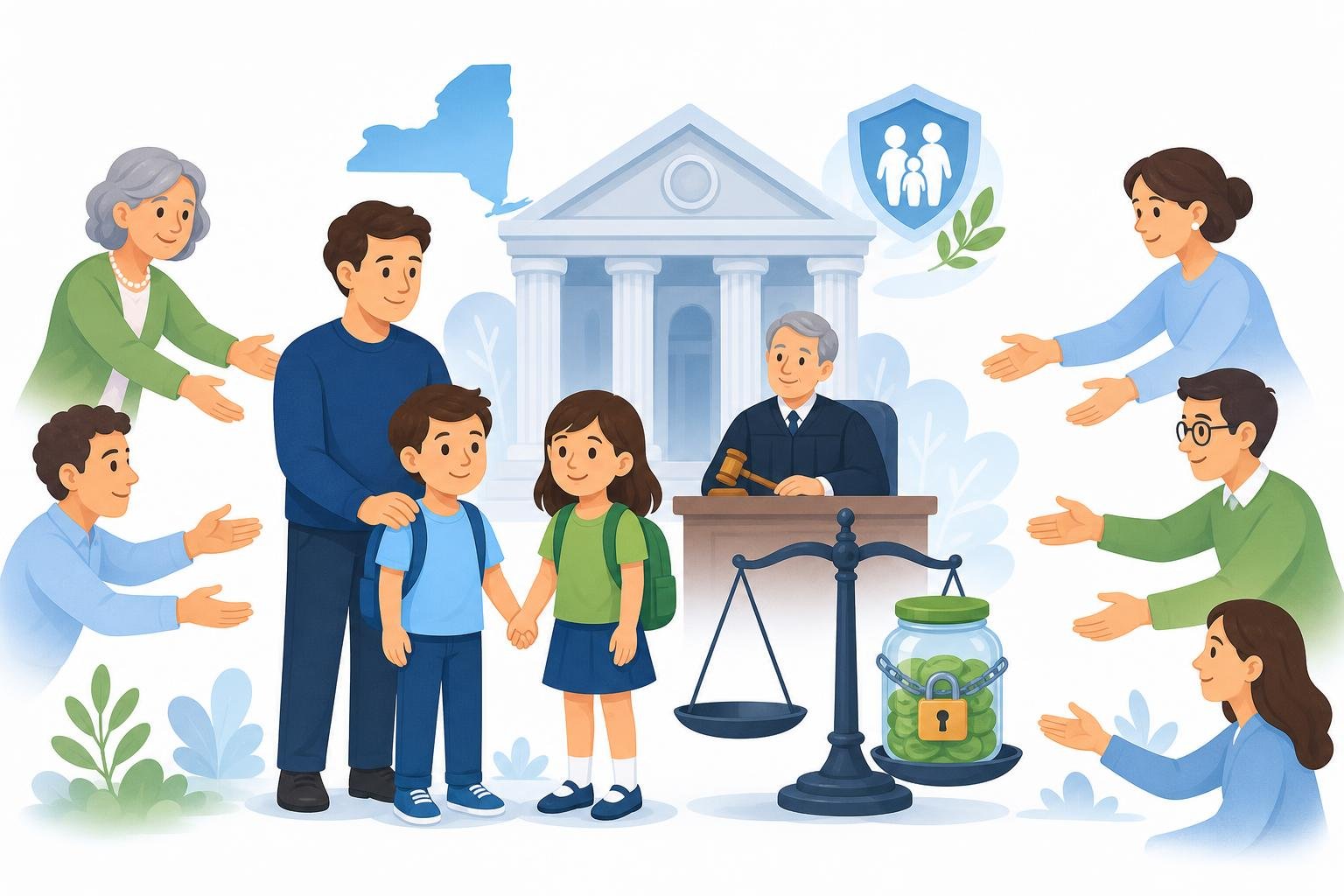
If you die without a will in New York, state law decides who inherits, and if neither parent is living, a judge decides who raises your children. Money left to children under 18 is managed under court supervision and handed to them outright at 18.
Who raises your children
If the other parent is alive, your children usually stay with them. If neither parent is living, relatives or friends ask the Surrogate's Court to appoint a guardian, and the judge chooses, sometimes between family members who disagree. Your children may live with someone temporarily while that is decided.
Who inherits
New York's rules for someone who dies without a will:
- Spouse and children: Your spouse gets the first $50,000 and half of the rest; your children share the other half
- Children, no spouse: Your children share everything
- Spouse, no children: Your spouse gets everything
An unmarried partner inherits nothing under these rules.
What happens to a child's inheritance
A child under 18 can't own money directly. The court appoints a guardian of the property, who reports to the court and needs its approval to spend. At 18, your child receives whatever is left, with no strings attached.
Life insurance and retirement accounts follow their beneficiary forms, not a will. If a minor child is named there, the same court process applies.
What a plan changes
You choose the guardian and backups. A trust can hold your children's money and pay it out for school, health and support, then either hand it to them at the age you pick instead of 18, or keep it in a lifetime asset protection trust that holds it for your child's benefit for their whole life, which can protect it from your child's creditors, lawsuits and a divorce. Your family can skip court for what's in the trust.
Book a free 15-minute call with our office.
This material is provided for educational and informational purposes only. It does not constitute ERISA, tax, legal, or investment advice. You should separately consult an appropriate professional for advice tailored to your specific needs and circumstances.